Manual Takeoffs Are a Productivity Challenge
Quantity takeoffs are often one of the most tedious and time-consuming tasks in preconstruction. They require meticulous attention to detail and are prone to human error. Many teams still rely on manual tools like Bluebeam or even printed PDFs with rulers. While these methods can get the job done, they are slow and inefficient, especially when deadlines are tight and resources are limited.
The AI Advantage: Faster and Smarter Takeoffs
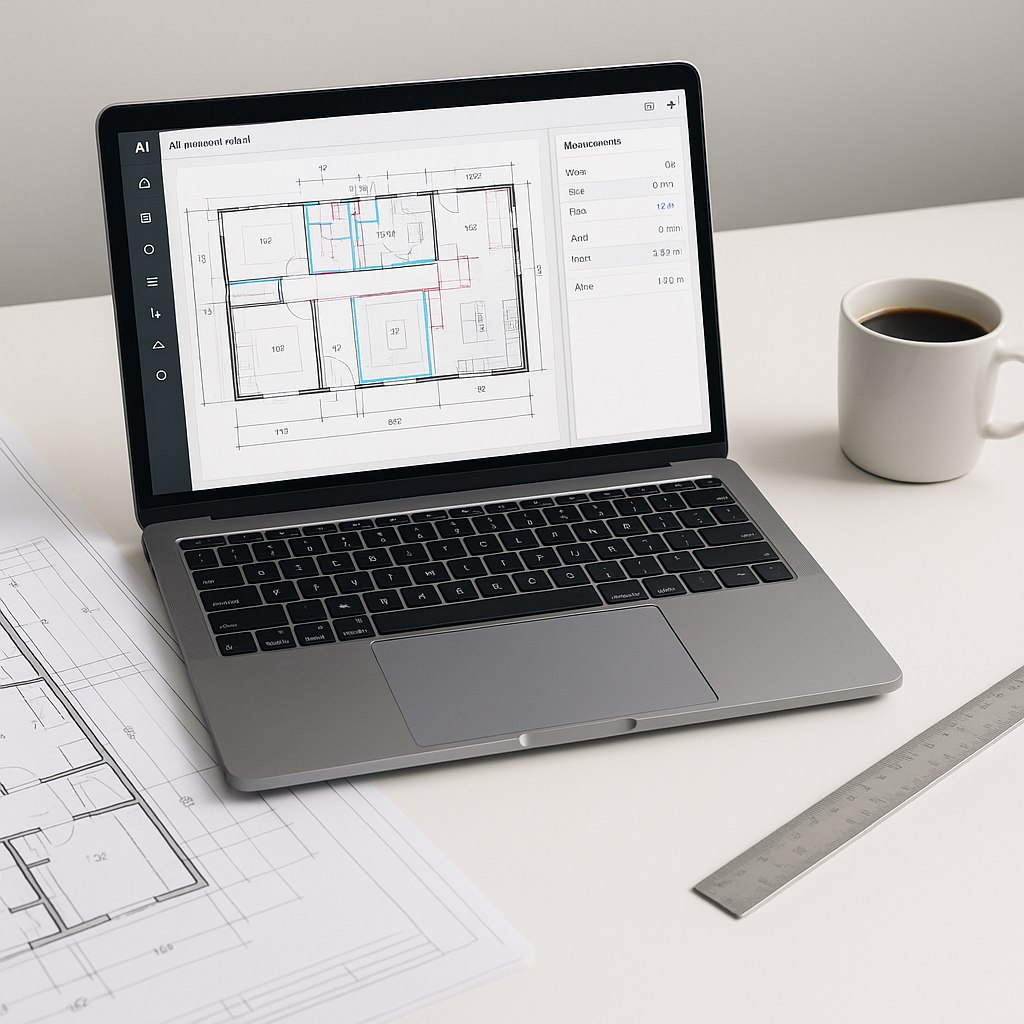
AI-powered takeoff tools are transforming the way estimators approach quantity extraction. Instead of manually measuring and counting elements on drawings, these tools allow you to upload PDF drawings and let the AI extract quantities automatically. The AI identifies key elements such as walls, doors, and areas, and generates a complete quantity takeoff. Additionally, it flags areas requiring manual review, ensuring accuracy while saving significant time.
Benefits of AI in Preconstruction Estimation
By automating the takeoff process, AI tools enable teams to:
- Save time on repetitive tasks, allowing more focus on strategic activities like bid preparation and subcontractor negotiations.
- Reduce errors by flagging low-confidence areas for manual review.
- Scale to handle projects of varying sizes and complexities.
These tools act as an augmentation to human expertise, not a replacement, amplifying the productivity of your team.
Considerations When Using AI Tools
While AI-powered takeoff tools offer significant advantages, there are some factors to keep in mind:
- Input Quality: The accuracy of AI-generated takeoffs depends on the quality of the input drawings. Blurry PDFs or inconsistent annotations may require additional manual review.
- Learning Curve: Although most AI tools are designed to be user-friendly, teams may need a short period to adapt to the new workflow. However, this learning curve is typically much shorter than training a new estimator from scratch.
FAQ
Q: How accurate are AI-generated takeoffs?
A: AI-generated takeoffs can be highly accurate, but the results depend on the quality of the input drawings. Always review flagged areas for best results.
Q: Can AI handle complex projects?
A: Yes, AI tools are designed to scale and can handle projects of varying sizes and complexities.
Q: What if my drawings are outdated or inconsistent?
A: AI tools can process older or inconsistent drawings but may require more manual review. Clean and well-annotated inputs yield the best outcomes.
The Bottom Line
AI-powered tools are revolutionizing preconstruction estimation by automating the quantity takeoff process. They save time, reduce errors, and allow teams to focus on higher-value tasks. While human expertise remains essential, these tools provide a powerful way to enhance productivity and accuracy in preconstruction workflows.