The Hidden Bottleneck in Estimation: Takeoffs
Let’s be honest: the most tedious part of preconstruction is quantity takeoff. Tracing room areas, wall lengths, and fixture counts on PDFs isn’t just time-consuming—it’s exhausting. And if you’re a general contractor (GC) or subcontractor handling multiple bids, the hours can add up quickly. Manual takeoffs often require significant time and effort, which could otherwise be spent on higher-value tasks.
The problem? It’s not just the time. Manual takeoffs are error-prone. A missed line here or a miscalibrated scale there can lead to costly mistakes—or even losing the bid entirely.
AI-Powered Takeoffs: A Streamlined Approach
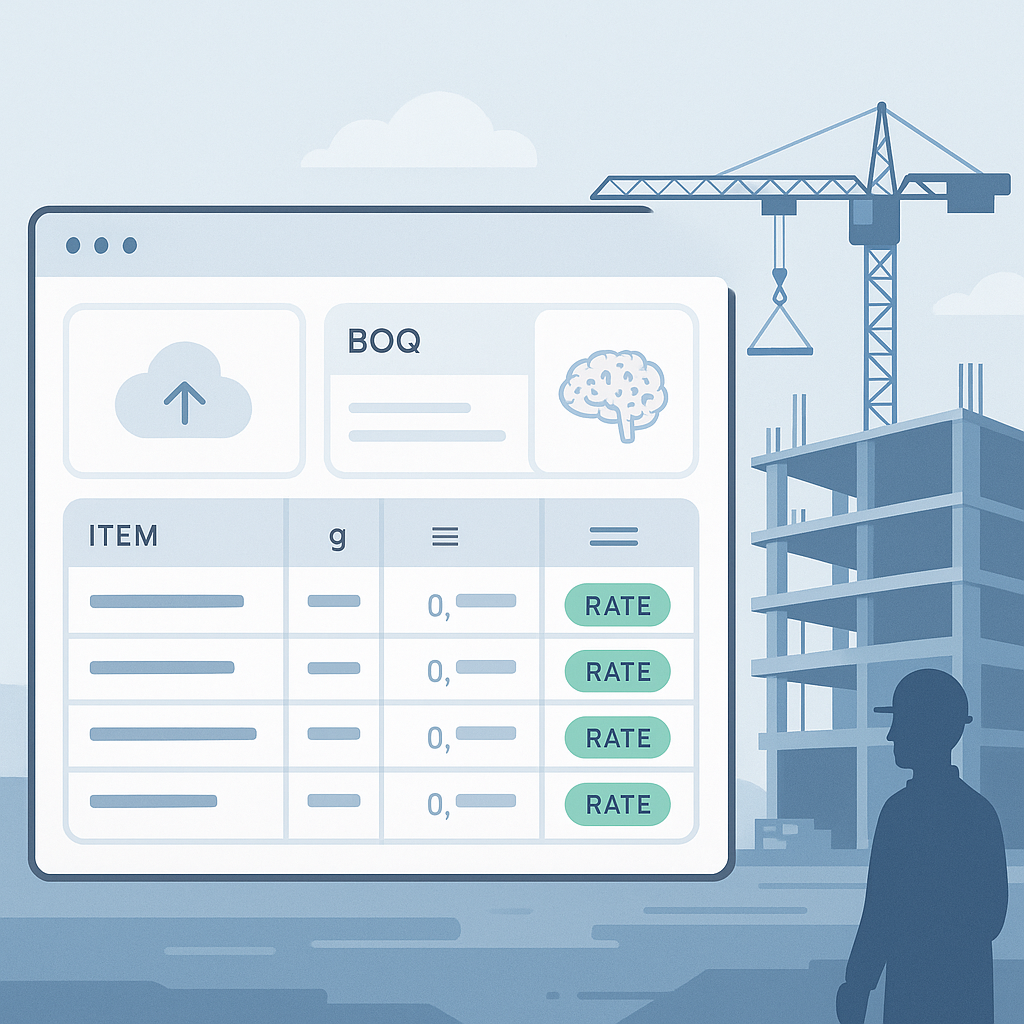
AI tools are transforming the takeoff process. Instead of spending hours on manual measurements, you can upload your drawings, and the AI extracts quantities in a fraction of the time.
How It Works
AI-powered tools use machine learning to analyze PDFs and identify elements like room areas, linear measurements, and fixture counts. This automation reduces the need for manual tracing and counting, allowing estimators to focus on validating results and refining estimates.
Illustrative example —
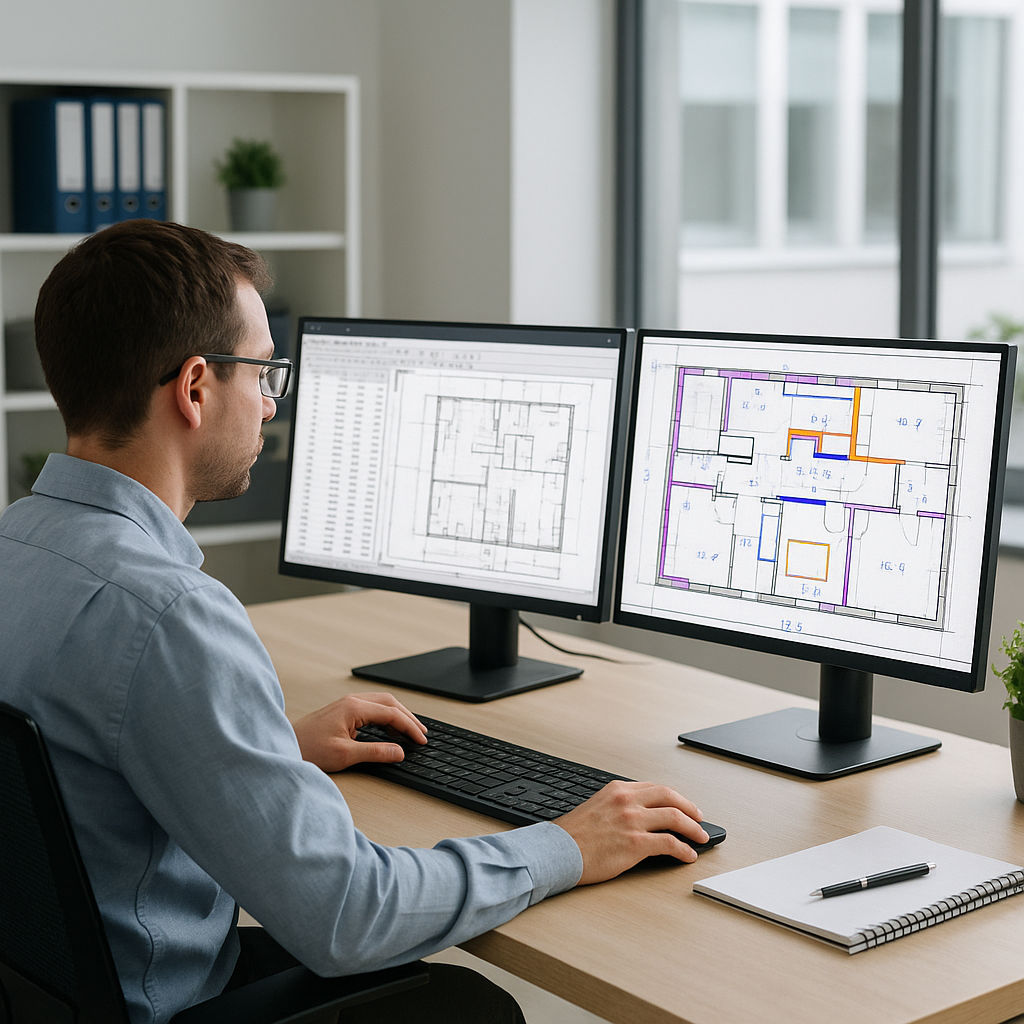
- Manual Process: Estimators spend significant time tracing PDFs with software, calibrating scales, drawing line segments, and manually counting items. Errors can occur when someone skips a page or misinterprets a dimension.
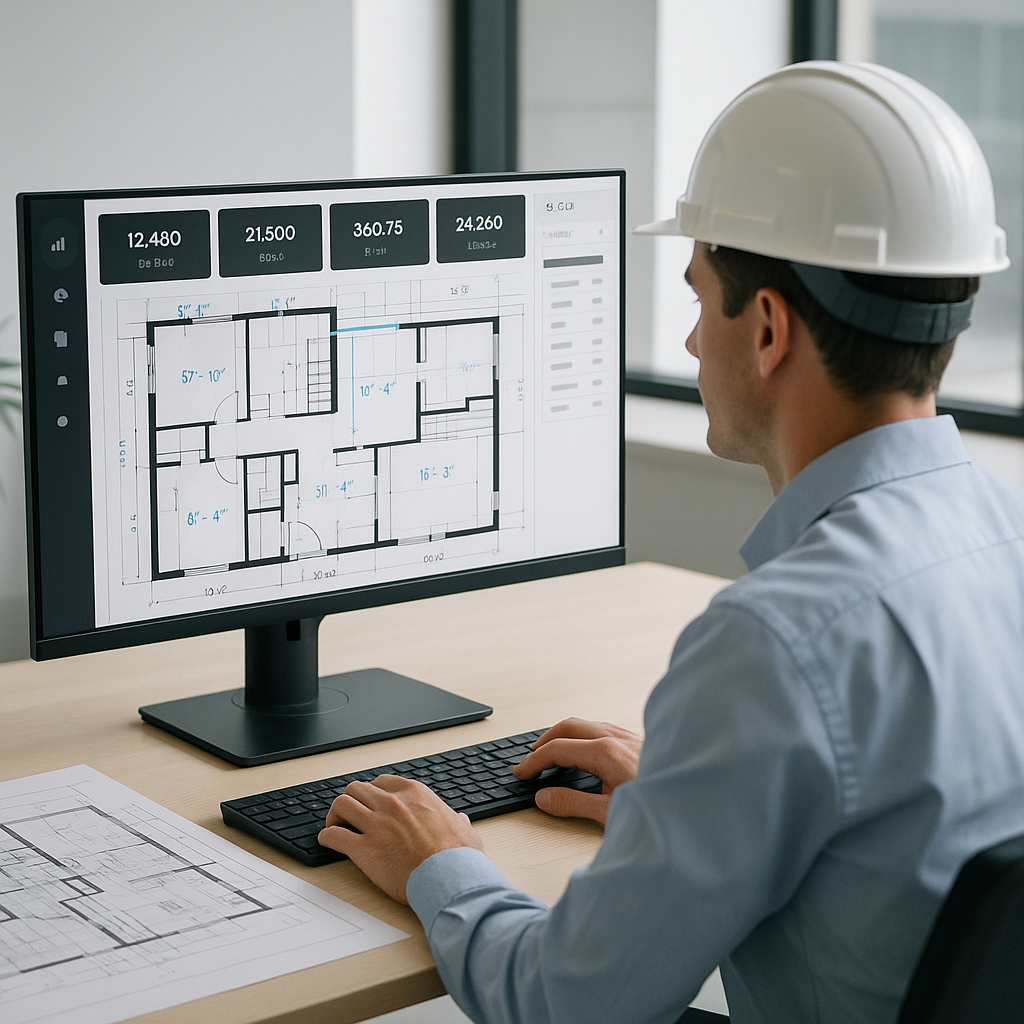
- AI-Powered Process: Upload the same PDFs into an AI tool. The tool automatically extracts quantities, highlights areas needing review, and generates a report. The time required is drastically reduced compared to manual methods.
Why Manual Takeoffs Are Still a Problem
You might think, "We’ve got this covered with tools like Bluebeam or PlanSwift." But here’s the reality: those tools still rely heavily on manual input. You’re drawing lines, calibrating scales, and rechecking every dimension. The software digitizes the process but doesn’t eliminate the repetitive work.
AI, on the other hand, automates the grunt work. Instead of tracing a wall, you’re reviewing its measurement. Instead of counting windows, you’re validating the AI’s count. This shift allows estimators to focus on higher-value tasks, such as refining bid strategies and coordinating with subcontractors.
Common Objections (And Why They’re Worth Addressing)
"AI Can’t Be Trusted for Accurate Measurements."
It’s true that no system is perfect. That’s why many AI tools include features like confidence scoring and manual override. Estimators remain in control, using the AI to handle repetitive tasks while ensuring accuracy through validation.
"This Only Works for Big Projects."
AI tools are scalable and can be used for projects of any size. Smaller teams, in particular, can benefit from the efficiency gains, as they often have fewer resources to dedicate to manual takeoffs.
"Learning a New Tool Takes Too Much Time."
Most AI-powered tools are designed to be user-friendly and require minimal training. Once teams use the tool on a few projects, the system often adapts to their workflow, making it even easier to use over time.
How to Get Started with AI-Powered Takeoffs
If you’re ready to streamline your takeoff process, here’s how to begin:
- Evaluate Your Current Process. Assess how much time and effort you’re spending on takeoffs per bid. Identify areas where automation could save time.
- Choose an AI Tool. Look for a platform that integrates with your existing tools (like Bluebeam or Procore) and offers features like confidence scoring.
- Start Small. Test the tool on a single project. Compare the AI-generated takeoff to your manual process and identify areas for review.
- Scale Up. Once you’re confident in the results, roll out the tool across your entire team.
Final Thoughts
Manual takeoffs are a significant bottleneck in preconstruction estimation. They consume time, increase costs, and introduce the risk of errors. AI-powered tools offer a faster, more reliable alternative by automating the repetitive aspects of takeoffs. By adopting these tools, you can focus on what truly matters: delivering accurate estimates and winning more bids.