The Hidden Bottleneck in Construction Estimation: Rate Matching
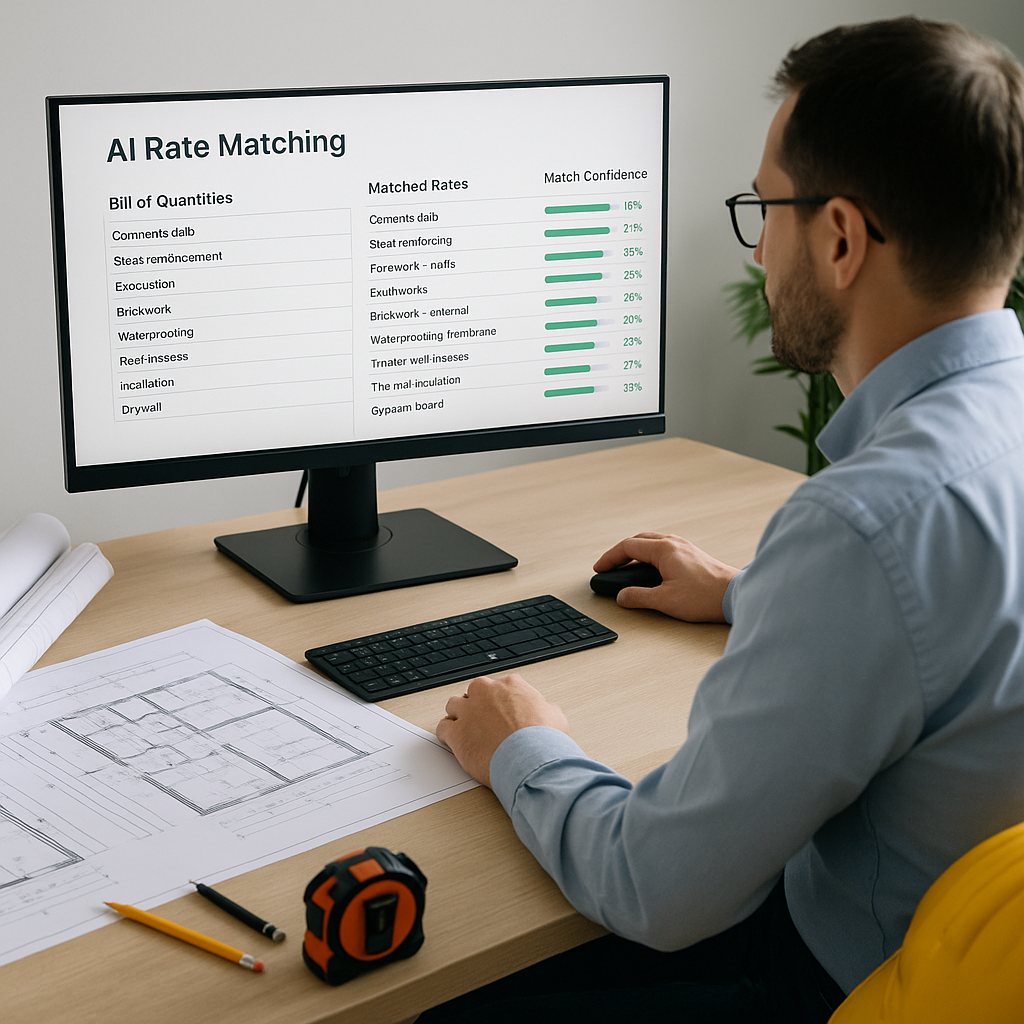
Every estimator knows the pain of rate matching. You're working through a Bill of Quantities (BOQ), line by line, flipping through hundreds—sometimes thousands—of pages in a rate book. It's slow, it's tedious, and it's easy to make mistakes.
A mid-sized project BOQ could have hundreds of line items. Matching each one manually takes significant time. If you're managing multiple bids or projects, the inefficiencies compound, creating a bottleneck in your workflow.
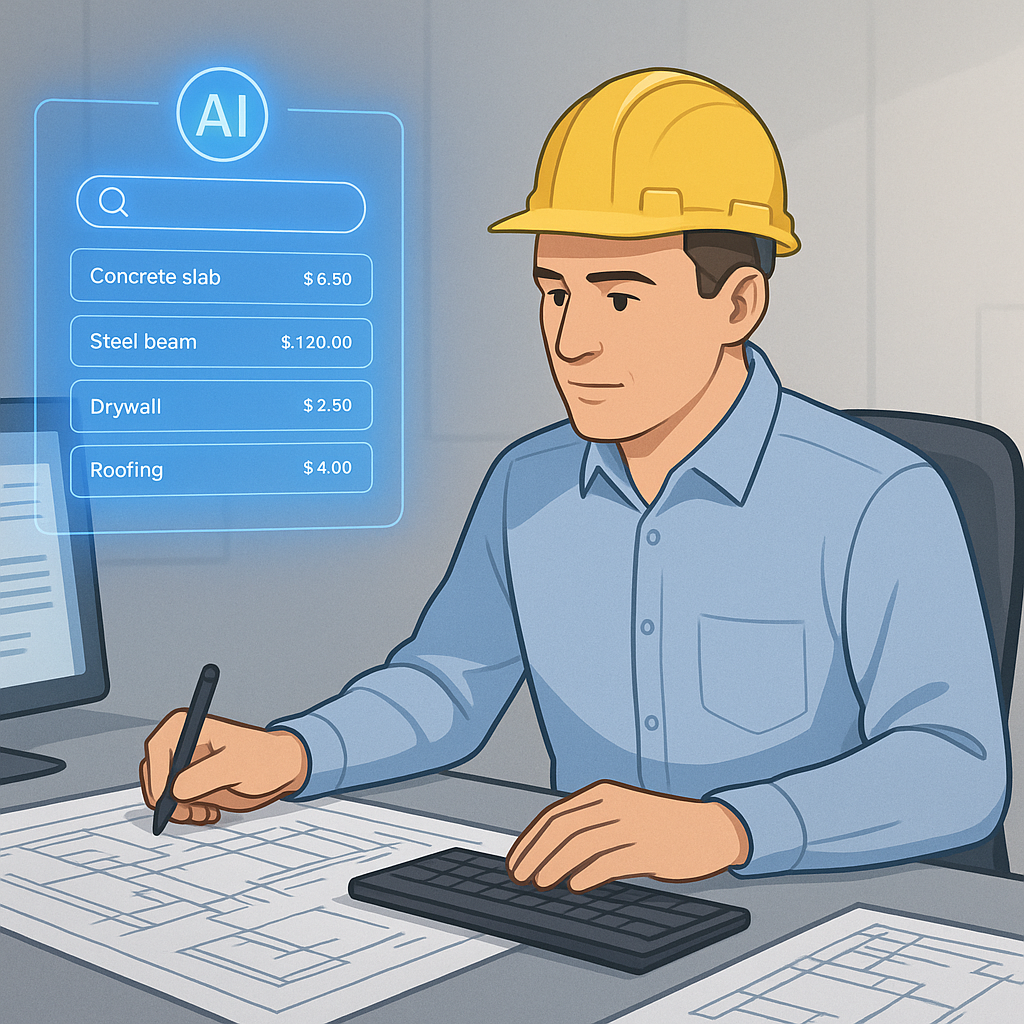
Now, let’s talk about AI-powered rate matching. Tools using semantic search can cut through the noise. Imagine typing "precast concrete slab" into a search bar and getting a relevant result—complete with labor, material, and equipment costs—in seconds. That's the potential of AI.
Why Manual Rate Matching is Challenging
Manual rate matching isn't just slow; it's error-prone. Here are the three most common issues:
- Missed Rates in Catalogs: It's easy to overlook a rate buried deep in a catalog.
- Inconsistent Formatting: Rate books aren’t standardized. Different formats and regional adaptations create confusion.
- Time Pressure: Tight deadlines often lead to "ballpark" estimates, which can result in inaccuracies.
These problems don't just hurt efficiency—they can impact project margins. A missed rate or wrong assumption can mean bidding too high and losing the job, or bidding too low and losing money.
How AI Improves Rate Matching
AI-powered platforms address these issues by removing manual guesswork. Here’s how:
- Semantic Search: Instead of flipping through pages, you type your description. AI understands the context and pulls the most relevant rates from a database.
- Multi-Catalog Support: Whether you're using CPWD, RSMeans, or other catalogs, the system adapts. It even allows for custom catalogs, so your unique rates are integrated.
- Learning Over Time: The more you use it, the smarter it gets. By tracking accepted or rejected rates, it fine-tunes its recommendations.
Illustrative example — A contractor using AI-powered rate matching could save significant time on rate lookup for a single bid, freeing up resources for other critical tasks.
Addressing the Skeptics: "Can AI Really Replace My Expertise?"
AI isn’t a replacement for your expertise. It’s a tool that complements it.
Think of it this way: AI handles the repetitive tasks so you can focus on strategy. You’re still the one deciding markups, negotiating with subcontractors, and finalizing the estimate. The AI ensures you’re starting with accurate, defensible numbers.
What to Watch Out For
No tool is perfect, and AI is no exception. Here are a few things to keep in mind:
- Data Quality Matters: Your output is only as good as your input. If your BOQ or rate catalogs are poorly formatted, you’ll need to clean them up first.
- Human Oversight is Key: Always review AI-suggested rates. Use features like manual overrides to ensure accuracy.
- Learning Curve: While AI tools are designed to be user-friendly, plan for a brief training period. Most teams adapt quickly.
FAQ
Q1: Does AI work for smaller contractors?
Yes. AI platforms scale to any project size. Whether you’re pricing a small renovation or a large infrastructure bid, the process is the same.
Q2: Can I integrate AI with my existing tools?
Yes. Many platforms offer integrations with tools like Procore, Bluebeam, and Excel, allowing you to maintain your existing workflow.
Q3: What if my rates are custom or project-specific?
You can upload your own rate catalogs or define custom rates. The AI incorporates these seamlessly for future estimates.
Q4: How accurate are AI-generated rates?
AI tools are designed to be highly accurate, but human review is essential to ensure the final numbers meet your standards.
The Bottom Line
Rate matching doesn’t have to be a bottleneck. With AI-powered tools, you can reduce manual labor, minimize errors, and bid more confidently. If you're still relying on manual processes, it may be time to explore how AI can enhance your estimation workflow.