The Time Sink of Manual Takeoff
If you’re an estimator, you know the drill. A new bid package lands on your desk, and the first step is takeoff. That means printing (or importing) dozens of drawings, tracing every beam, wall, and window by hand, and hoping you don't miss a count. This process can take significant time and effort, often tying up resources that could be better spent elsewhere.
For general contractors, this isn’t just tedious — it’s costly. Time spent on manual takeoff limits the number of bids submitted, increases the risk of errors, and creates tighter deadlines. But what’s the alternative? AI.
AI Takeoff: A Faster Approach
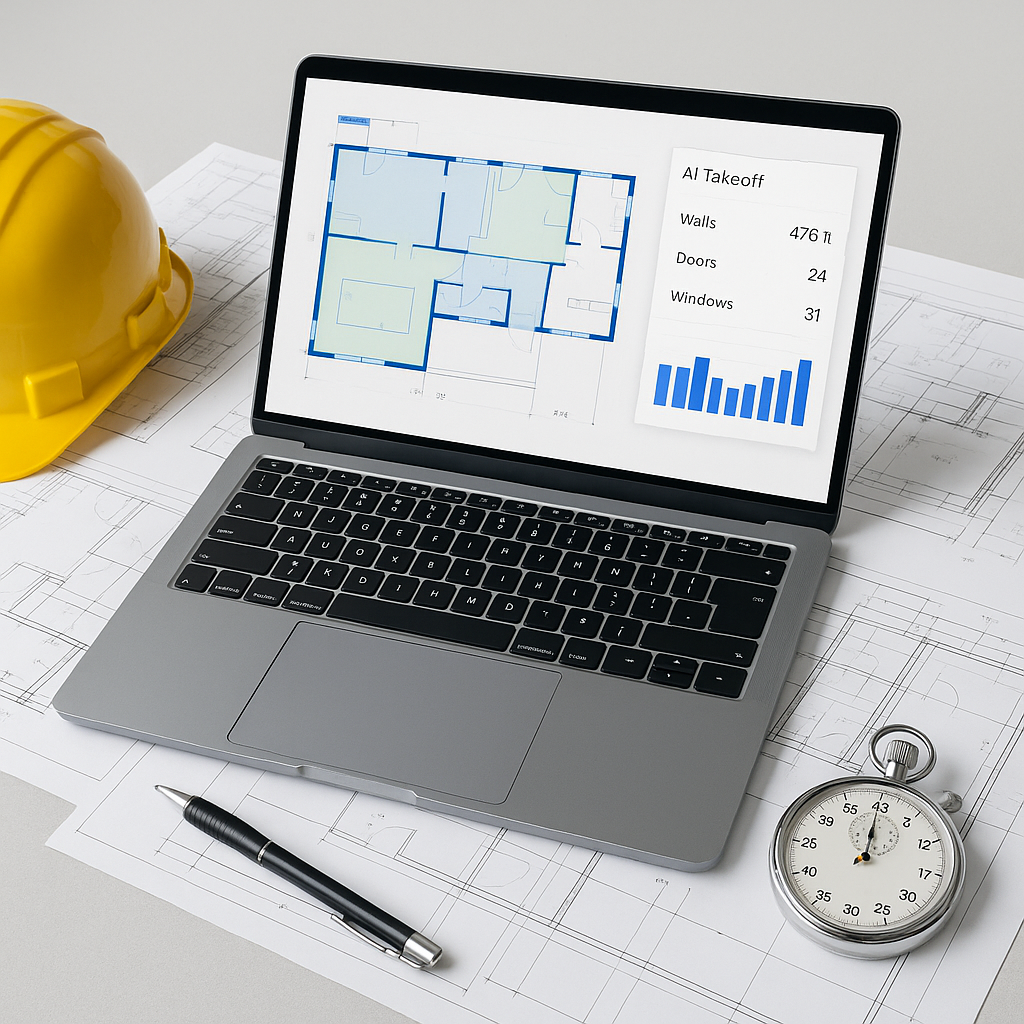
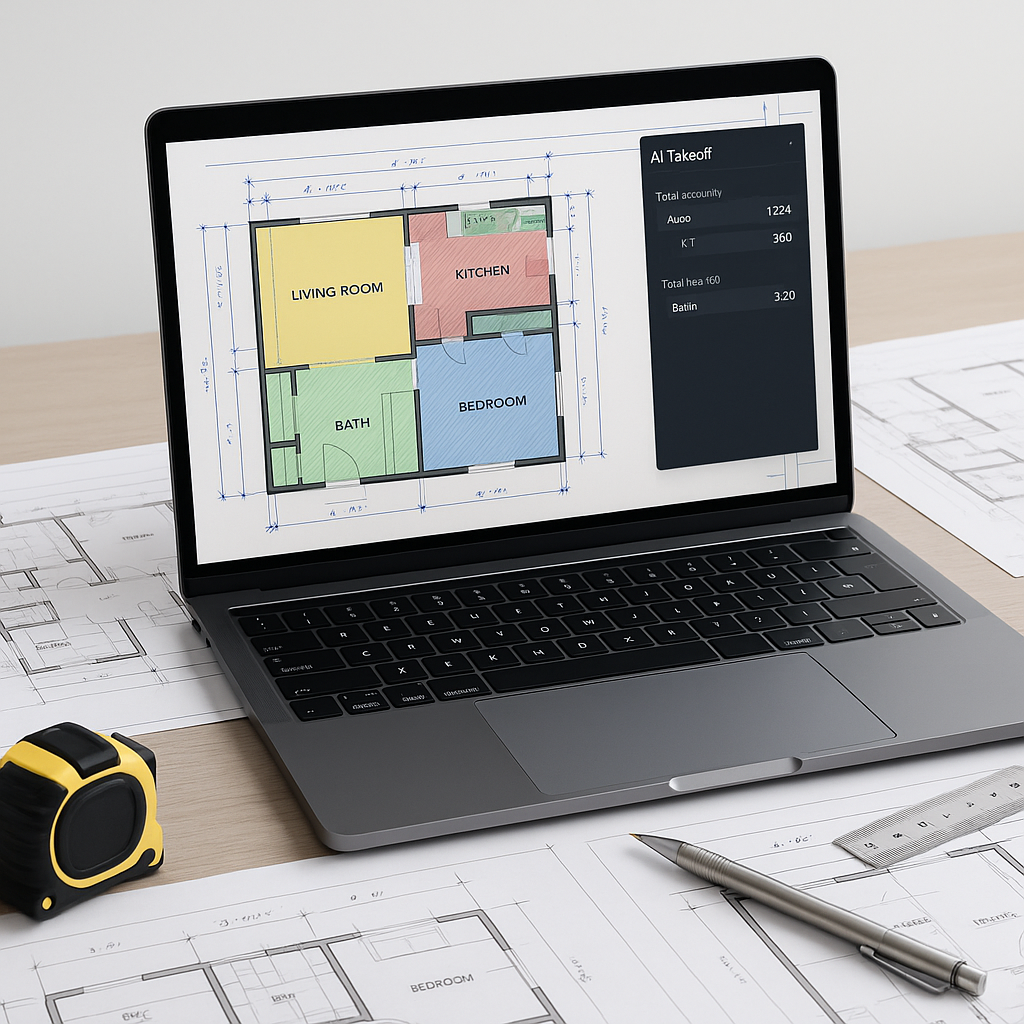
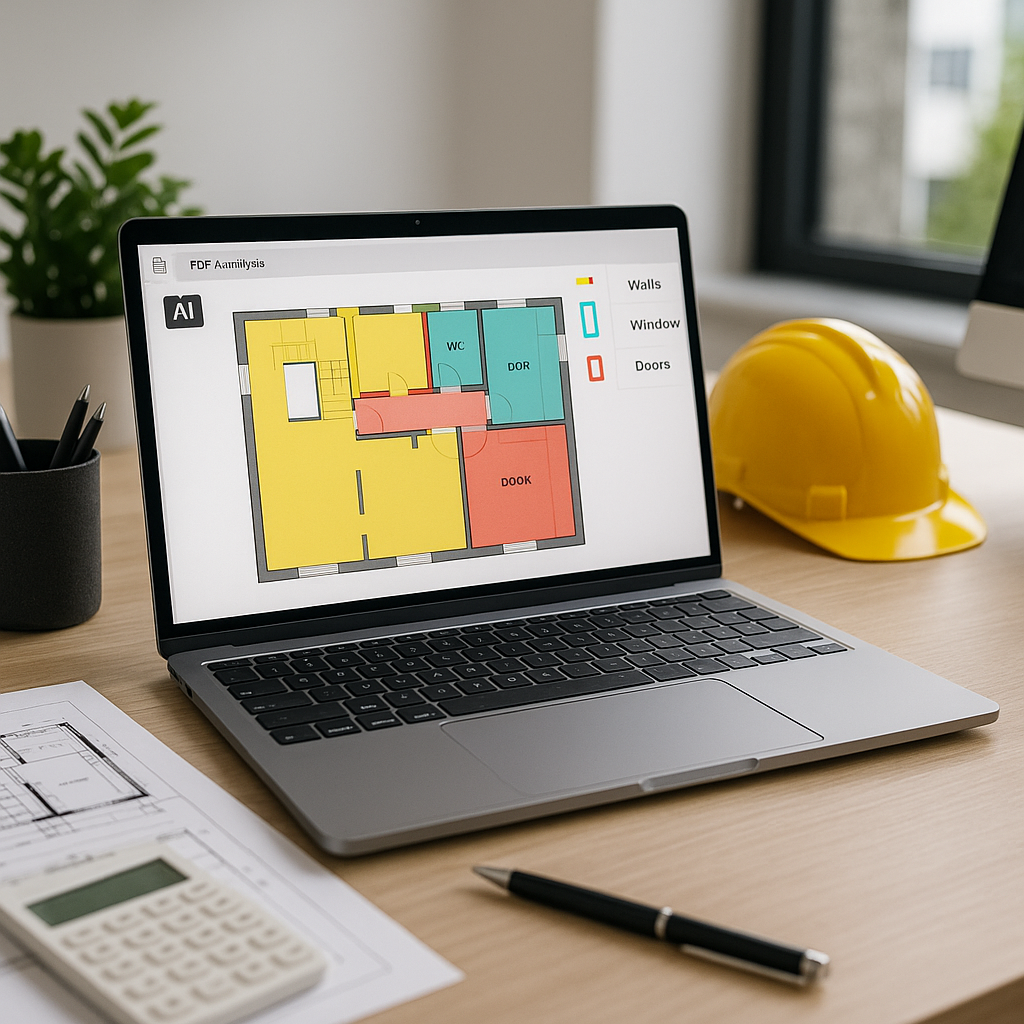
Here’s where tools like AI-powered takeoff software come in. Instead of manually tracing lines on a PDF, you upload the drawing set. The AI scans them, identifies quantities — room areas, wall lengths, door/window counts — and generates a detailed QTO (quantity takeoff) in a fraction of the time. It’s not magic, but it feels like it.
Illustrative example — Imagine a scenario where a manual takeoff process takes multiple days. By using AI, this process could be reduced to hours, freeing up valuable time for estimators to focus on higher-value tasks.
What Makes AI Takeoff Reliable?
Skeptical? Fair. The obvious objection is, “Can AI really understand the nuances of a construction drawing?” The answer: Not perfectly. But it doesn’t need to.
AI takeoff tools work best when paired with human oversight. For example, these tools often highlight areas of uncertainty (like unclear lines or overlapping annotations) so you can review and adjust them. Think of it as an assistant — it handles the repetitive work, and you handle the judgment calls.
Plus, the system learns. Over time, it gets better at recognizing your specific drawing styles and preferences. With continued use, users often report noticeable improvements in accuracy and efficiency.
The ROI of AI Takeoff
Automating takeoff can lead to significant time savings, which translates into cost savings. Faster takeoffs mean more bids can be prepared within the same timeframe, increasing opportunities for winning projects. Additionally, reducing manual effort minimizes the risk of errors, which can have costly implications during construction.
Illustrative example — Consider a team that spends extensive hours on manual takeoff for each project. By adopting AI tools, they could reallocate that time to other critical tasks, improving overall productivity and project outcomes.
Common Questions About AI Takeoff
Q: Do AI tools replace estimators?
No. AI handles the repetitive parts (like takeoff) so estimators can focus on higher-value tasks: analyzing bids, negotiating with subs, and refining cost forecasts.
Q: What if the AI misses something?
That’s why human oversight is critical. AI tools often flag areas of uncertainty so you can double-check them. You’re still in control.
Q: How hard is it to learn?
Most AI takeoff tools are designed to be intuitive. Training typically takes a short amount of time, allowing teams to quickly integrate the technology into their workflows.
What to Watch For
AI isn’t perfect. Here are a few things to keep in mind:
- Input quality matters. Upload clean, legible drawings to get the best results.
- Watch for edge cases. Complex custom details might need manual review.
- Test before scaling. Start with smaller projects to build confidence in the tool.
Ready to Improve Your Takeoff Process?
AI-powered tools can significantly reduce the time and effort required for preconstruction takeoff. If you're looking to streamline your workflow and improve efficiency, it may be time to explore these solutions.