The Takeoff Bottleneck No One Talks About
If you've ever worked on a preconstruction estimate, you know the pain of manual takeoffs. Hours spent measuring wall lengths, counting doors, and tracing beams on PDF drawings—it’s tedious, error-prone, and the furthest thing from value-added work.
Why does this still happen? Because most teams are stuck with outdated tools. A mix of Bluebeam, Excel, and manual processes might get the job done, but at what cost? Manual takeoffs consume significant time and effort, which could otherwise be spent on refining bids or pursuing additional projects.
Now imagine this: uploading those same drawings into an AI-powered tool and getting accurate quantities in a fraction of the time. Sounds too good to be true? It’s not. This is exactly what modern AI-powered takeoff tools can do.
How AI-Powered Takeoffs Work
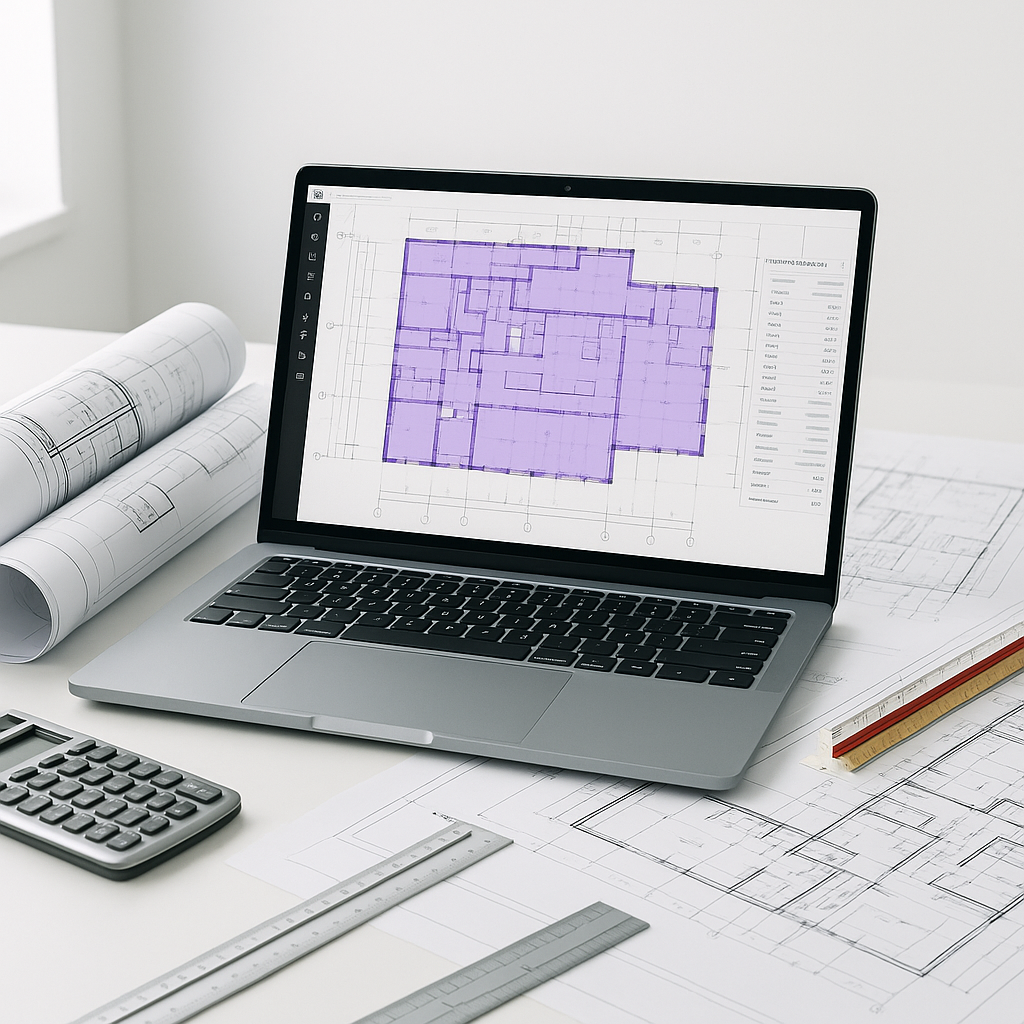
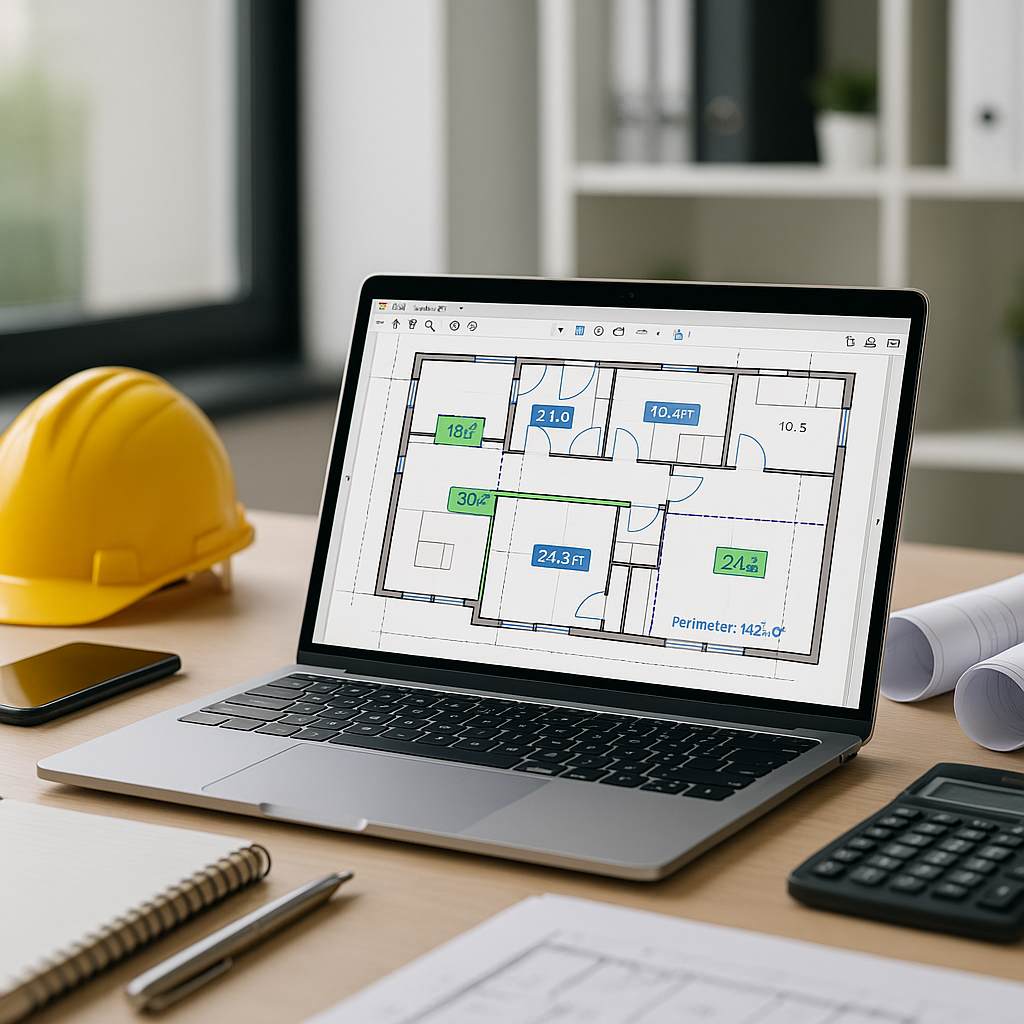
Here’s the magic behind it: AI tools use computer vision to “read” your PDF drawings. They identify walls, windows, doors, beams—whatever you need quantified—and extract the data automatically. It’s like having an extra estimator on your team, but one who never gets tired or makes calculation errors.
Illustrative example — A general contractor working on a large-scale project could use an AI tool to process hundreds of pages of drawings in under an hour, significantly reducing the time spent on manual takeoffs. This allows the team to focus on higher-value tasks like value engineering and subcontractor negotiations.
Why Manual Takeoffs Are Costing You
Let’s break it down:
- Time Sink: Manual takeoffs require significant time and effort, often diverting resources from more strategic activities.
- Human Error: Estimators are human. Miscounting beams or miscalculating square footage can result in underbidding (and losing money) or overbidding (and losing the project).
- Opportunity Loss: Every hour spent on takeoffs is an hour you’re not refining your bid strategy or pursuing additional projects. In competitive markets, that’s a critical disadvantage.
The ROI of AI-Powered Tools
AI-powered tools not only save time but also improve accuracy. According to a 2023 McKinsey report, early adopters of AI-powered estimation tools saw significant cost savings by reducing errors and rework.
By automating repetitive tasks, these tools free up estimators to focus on strategic decision-making, ultimately enhancing the quality of bids and increasing the likelihood of winning projects.
Addressing the Skeptics
You might be thinking, “Sure, AI is fast, but it doesn’t understand the nuances of construction.” That’s partially true. AI tools aren’t replacements for experienced estimators; they’re amplifiers. You’re still the one making judgment calls and deciding on markups. The AI just handles the grunt work, like takeoffs and quantity calculations.
And what about accuracy? Tools often include features like confidence scoring and manual override options, so you can review and adjust as needed. It’s not about blind trust—it’s about making your job easier and faster.
Common Mistakes to Avoid
- Rushing the Setup: AI tools are only as good as the data you feed them. If your drawing files are mislabeled or incomplete, the output will reflect that.
- Skipping Training: While most tools are intuitive, a short training session can make a big difference. Make sure your team knows how to use features like remeasure overrides and scope exclusions.
- Ignoring Low-Confidence Lines: Review any flagged items. These are areas where the AI isn’t 100% sure, and a quick manual check can save you from costly errors.
FAQ
Q: Can AI tools handle revisions?
A: Yes. Many AI-powered tools allow you to upload revised drawings and highlight changes, so you don’t have to start from scratch.
Q: What if my project uses custom measurement standards?
A: Most AI-powered tools support multiple standards like CSI MasterFormat, CPWD DSR, and NRM2. You can configure the tool to match your needs.
Q: Is AI only for large projects?
A: Not at all. AI tools scale to any project size, whether you’re working on a small renovation or a large infrastructure bid.
Final Thoughts
Manual takeoffs are a bottleneck your team can’t afford. With AI-powered tools, you’re not just saving time—you’re creating space for higher-value work that actually moves the needle.
If your team is drowning in PDFs and spreadsheets, it’s time to explore AI-powered takeoffs.