Heat and Humidity: The Hidden Productivity Challenge
Most estimators plan for labor rates, material costs, and equipment rentals. But how many factor in the challenges posed by heat and humidity? If you’re working in places like Florida or Texas during peak summer, these two elements can significantly impact your project.
Why Heat Matters
Heat stress is a real concern. When temperatures rise, worker productivity tends to decline. According to OSHA, heat can lead to fatigue, slower reaction times, and mistakes. In extreme cases, it can cause heat exhaustion or stroke, forcing crews off-site entirely.
For example, tasks like drywall installation or concrete pouring can take longer in high temperatures, potentially leading to delays and increased labor costs. Over time, these delays can accumulate and affect project timelines.
Humidity’s Impact on Workers and Materials
Humidity compounds the challenges posed by heat. High moisture levels make it harder for the body to cool down through sweat, increasing the risk of heat-related illnesses. Additionally, humidity can affect materials, causing issues like paint not drying properly, adhesives losing strength, and wood warping.
Testing materials under local conditions before starting a project can help identify potential issues early. This proactive approach can save time and money by preventing rework and material waste.
How to Mitigate Heat and Humidity Risks
1. Plan Labor Around Climate
Schedule labor-intensive tasks like framing or concrete pours during cooler months or early mornings. Prebook crews early to secure availability and potentially avoid peak season premiums.
2. Use Region-Specific Data
Leverage tools and resources that incorporate regional climate data into project planning. These tools can help adjust labor rates, material costs, and productivity factors based on the specific conditions of your project location. For example, in humid environments, they can identify materials prone to failure and suggest alternatives.
3. Test Materials Early
Pre-project mockups are essential in challenging climates. Testing adhesives, paints, and sealants under local conditions before scaling up can help ensure they perform as expected. This step can prevent costly rework and material failures.
4. Invest in Worker Safety
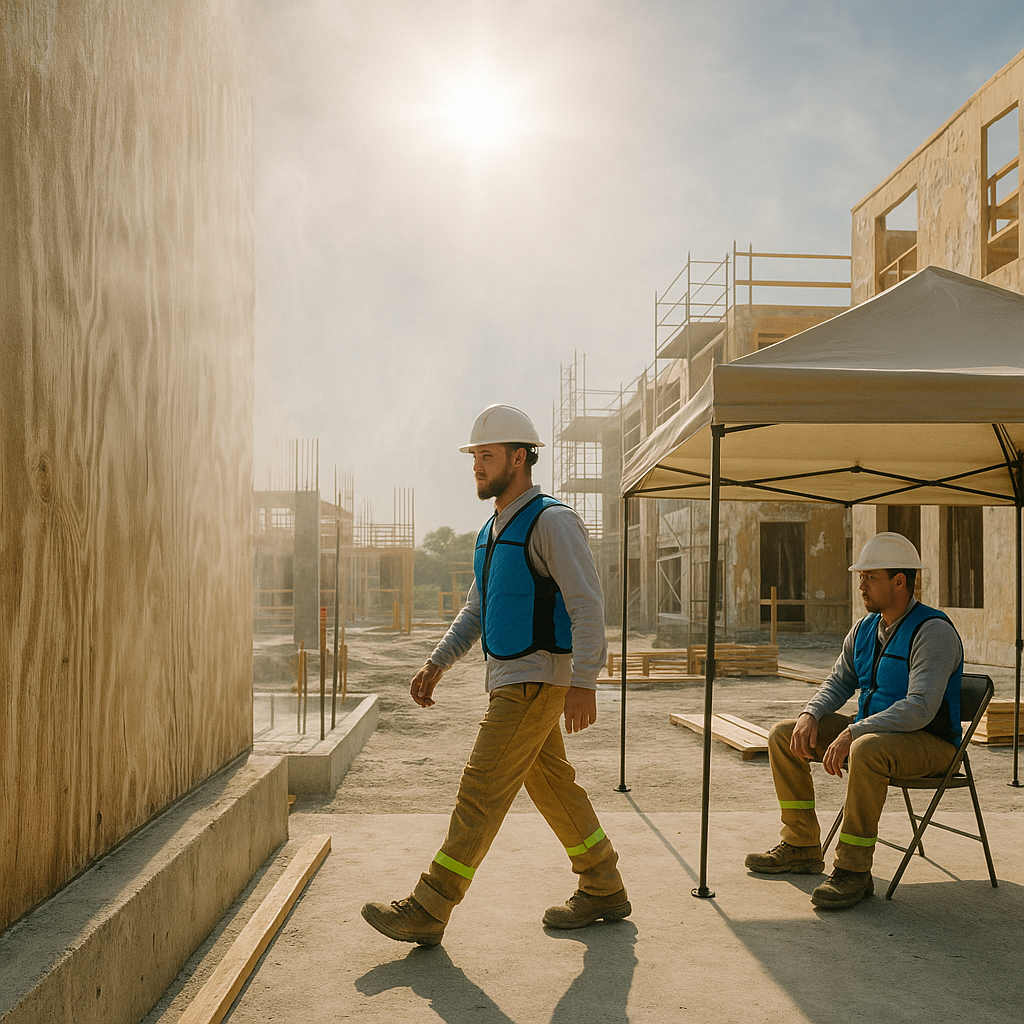
Implementing heat stress protocols, providing hydration stations, and creating shaded rest areas can help maintain worker productivity and safety. OSHA recommends regular breaks in extreme heat to reduce the risk of heat-related illnesses.
5. Adapt Quickly to Changing Conditions
When unexpected climate conditions arise during a project, having tools that allow for real-time adjustments can be invaluable. These tools can help you quickly assess the financial and scheduling impacts of changes, such as switching materials or modifying labor schedules.
Common Mistakes to Avoid
1. Ignoring Climate Data
Using generic rate books without accounting for climate-specific adjustments can lead to inaccurate estimates. Incorporating local labor productivity factors is crucial.
2. Skipping Mockups
Testing materials in controlled environments doesn’t always reflect real-world conditions. Always test materials under the actual humidity and temperature levels expected on-site.
3. Overlooking Worker Breaks
Pushing crews to work through extreme heat can backfire. Downtime due to heat stress often costs more than the time saved by skipping breaks.
Conclusion
Heat and humidity can significantly impact construction productivity, but with careful planning and the right tools, these challenges can be mitigated. By accounting for climate-specific factors, testing materials, and prioritizing worker safety, you can reduce delays and cost overruns while maintaining project quality.


