The Problem: The Hidden Cost of the Preconstruction Tool Stack
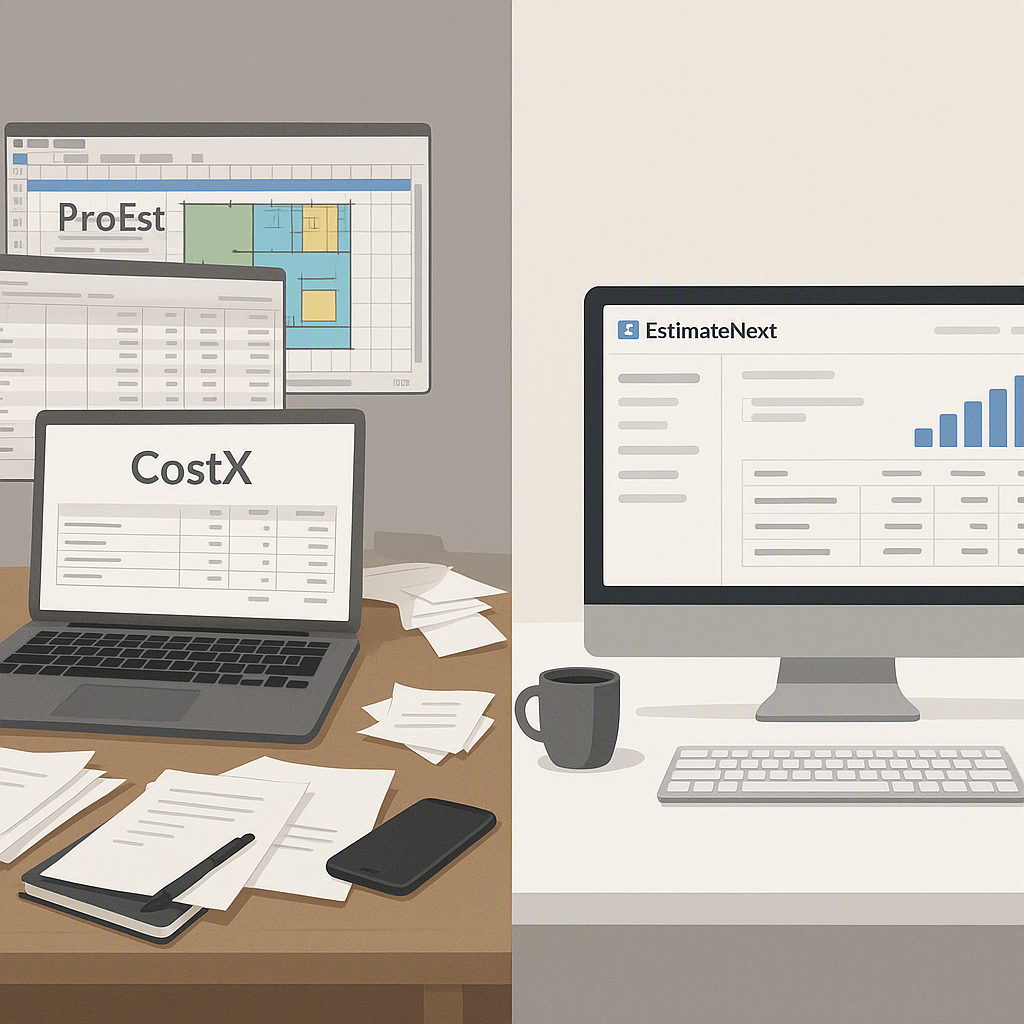
If you’re a general contractor, you’ve probably experienced the pain of juggling multiple tools during the preconstruction phase. CostX for takeoffs, ProEst for estimating, PlanSwift for basic measurements—and don’t forget RSMeans for your rate data and Excel to patch everything together. It’s a fragmented process that can lead to inefficiencies and higher costs.
The worst part? These tools don’t always integrate seamlessly. You’re constantly exporting, reformatting, and reconciling data across platforms. This fragmented workflow can slow down your team and reduce productivity.
The Game-Changer: One Platform to Rule Them All
What if you could replace all those tools with a single platform? That’s exactly what EstimateNext aims to do. It’s an AI-powered preconstruction estimation platform that combines takeoffs, rate matching, bid intelligence, and reporting—all in one workspace. Let’s focus on just one feature that’s a game-changer for general contractors: AI-powered auto-takeoff.
Feature Spotlight: AI-Powered Auto-Takeoff
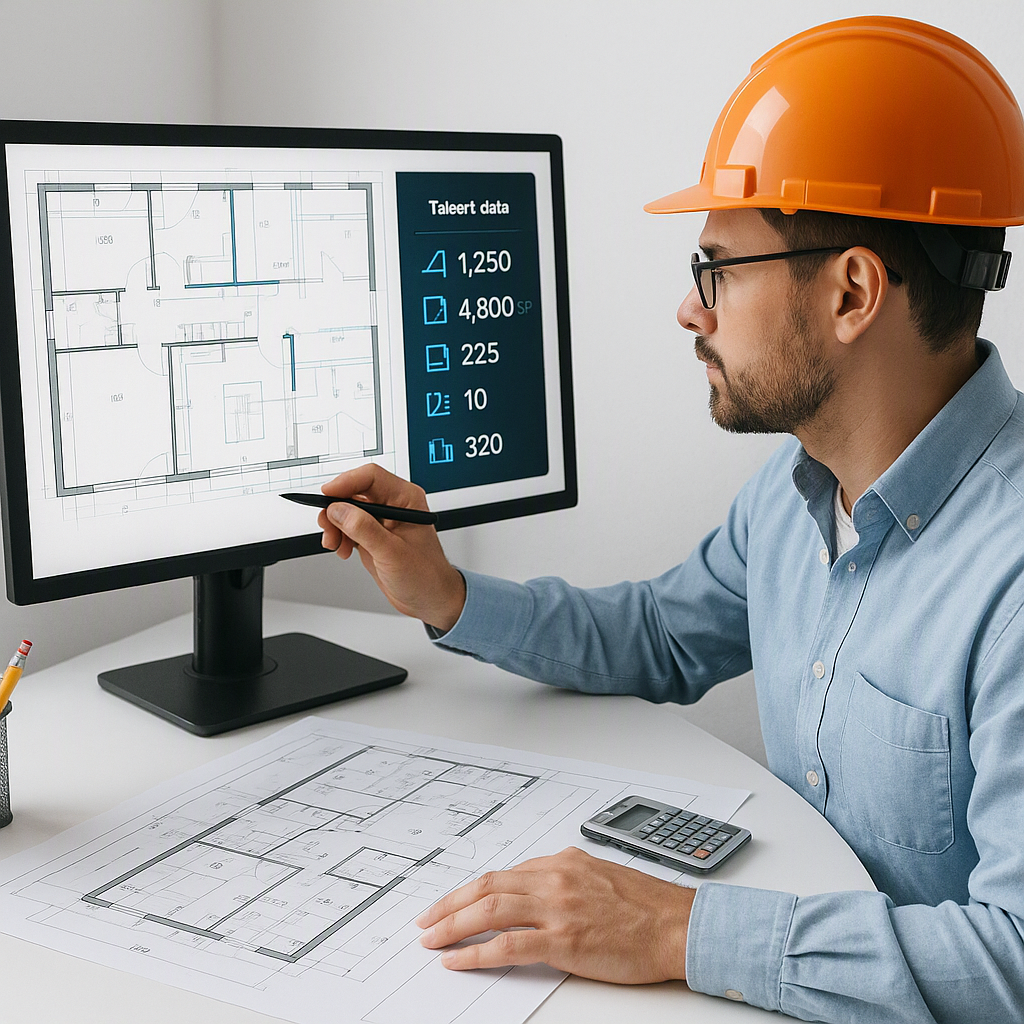
Manual takeoffs are a time-consuming and repetitive task for estimators. Traditional methods often involve tracing PDFs or drawings manually, which can take hours or even days for larger projects.
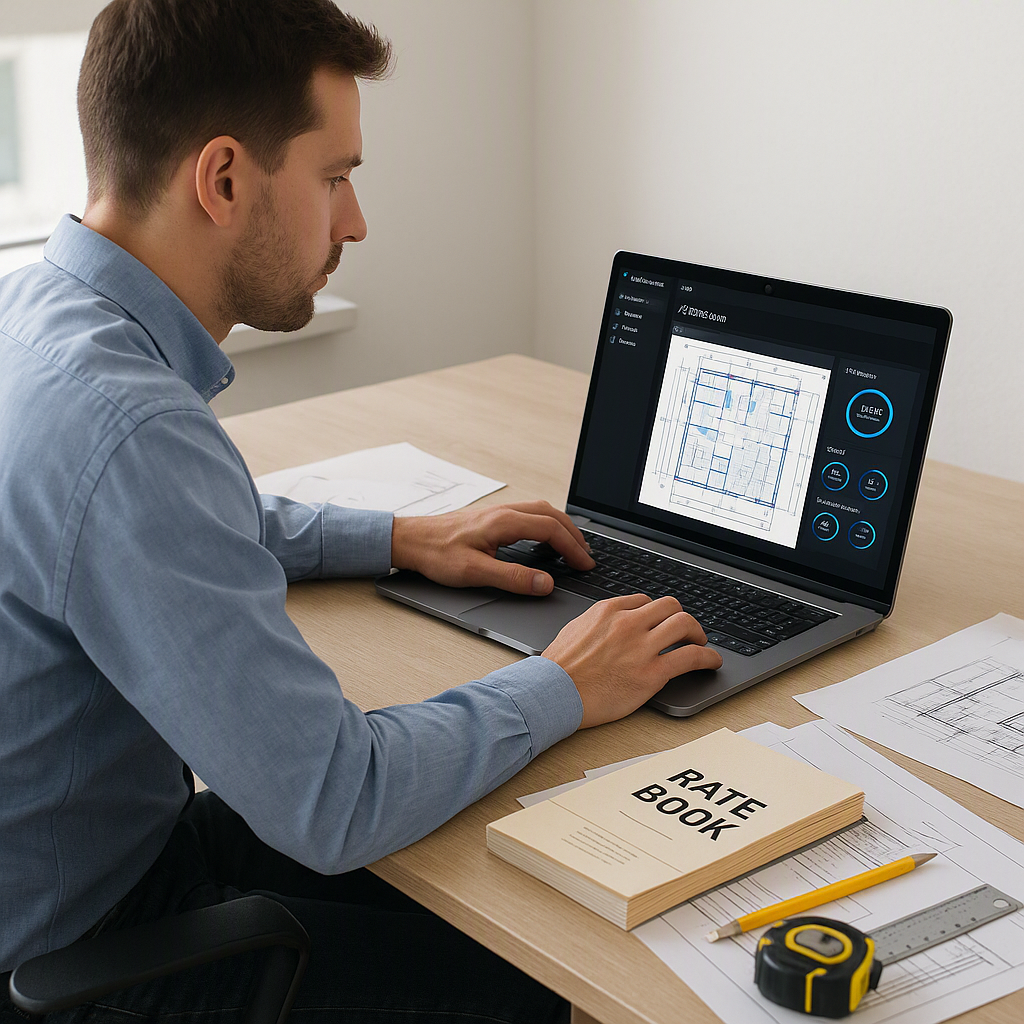
EstimateNext’s Vision AI simplifies this process. Here’s how it works:
- Upload Your Drawings: Drag and drop your PDF or DWG files into the platform. No need for manual calibration or setup.
- Auto-Extraction: The AI identifies key elements like room areas, wall lengths, door and window counts, and more. It even flags any low-confidence areas that might need a quick review.
- Instant Integration: The extracted quantities are automatically linked to your BOQ, ready for rate matching and cost analysis.
Illustrative example — Imagine a mid-size project where manual takeoffs might take two estimators several days to complete. Using an AI-powered tool like EstimateNext, this process could be significantly streamlined, allowing your team to focus on higher-value tasks.
Why This Matters: Beyond the Obvious
You might argue, “CostX already has a 2D and 3D takeoff tool. Why switch?” Fair question. Here’s the thing:
- Cost: Many traditional tools require significant upfront investment and annual maintenance fees. A cloud-based platform like EstimateNext can offer more flexible pricing models.
- Ease of Use: Traditional tools often have a steep learning curve and require significant training. EstimateNext’s AI-powered takeoff is designed to be intuitive and requires minimal onboarding.
- Speed: Even the most experienced user of traditional tools can’t match the speed of AI. Automating repetitive tasks allows your team to focus on strategic decision-making.
- Flexibility: Many traditional tools are desktop-only and require additional setups for remote access. EstimateNext is cloud-native, enabling your team to work from anywhere.
Why We Believed in the Old Way
For years, the fragmented tool stack was considered the norm in the construction industry. Each tool had its niche: CostX for detailed takeoffs, ProEst for estimating, PlanSwift for quick measurements. However, this approach often led to inefficiencies and higher costs due to the lack of integration and the time spent on manual processes.
What We Do Differently Now
By adopting a unified platform like EstimateNext, general contractors can streamline their workflows and reduce reliance on multiple tools. Here’s what changes:
- Takeoff Time: Automated tools can significantly reduce the time spent on manual takeoffs.
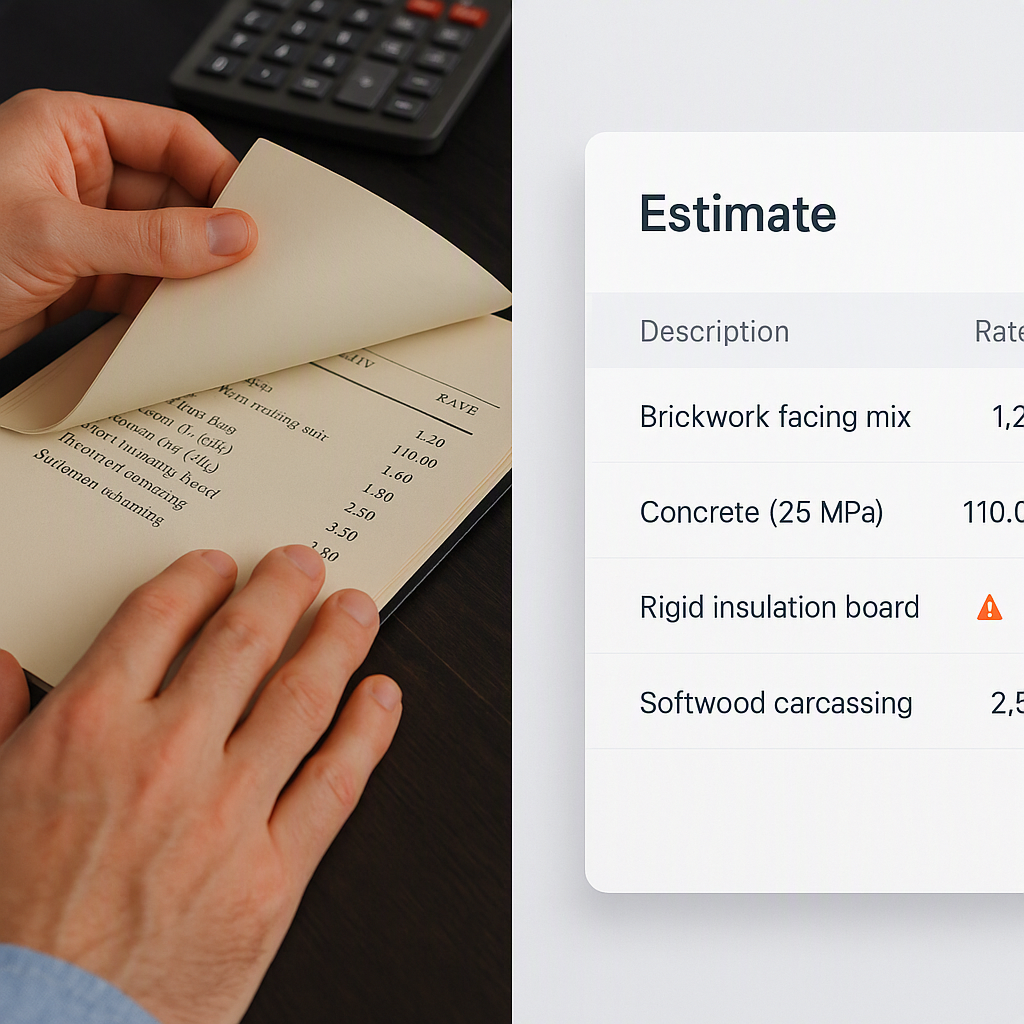
- Rate Matching: Instead of manually searching through rate sheets, semantic search capabilities can help match items quickly.
- Bid Decisions: Data-driven evaluations replace guesswork, improving the accuracy of Go/No-Go decisions.
What We’re Still Figuring Out
Switching to a single platform isn’t without its challenges. Change management is a real hurdle, as convincing a team to abandon tools they’ve used for years can take time. Additionally, while platforms like EstimateNext offer robust features, there’s always room for improvement, such as adding support for BIM/IFC files or integrating live-linked workbooks.
However, the cost of doing nothing is far higher. Every hour spent on manual tasks is an hour not spent on winning work. And in an industry as competitive as construction, that’s not a luxury most can afford.
Final Thoughts
If you’re tired of juggling multiple tools and watching your team waste hours on manual tasks, it’s time to rethink your approach. EstimateNext offers a smarter, faster way to handle preconstruction estimation.
Why not see for yourself? Get started free →