The Brutal Math of Manual Rate Matching
Let’s get real: flipping through 2,000-page rate books is a nightmare. Whether you're using RSMeans, CPWD DSR, or some custom catalog, the process is painfully slow. On average, it takes 12 hours per estimate just to find and verify rates. And that's assuming you don’t miss anything — a wrong rate can tank your bid faster than you can say 'change order.'
Example: Imagine estimating rates for a multi-million dollar hospital project. You’re tasked with finding rates for hundreds of items — everything from HVAC duct installation to specialized flooring for cleanrooms. Manually flipping through pages or searching PDF catalogs isn’t just tedious; it increases the risk of human error. Mispricing even one key item could mean losing the bid or worse, cutting into profit margins.
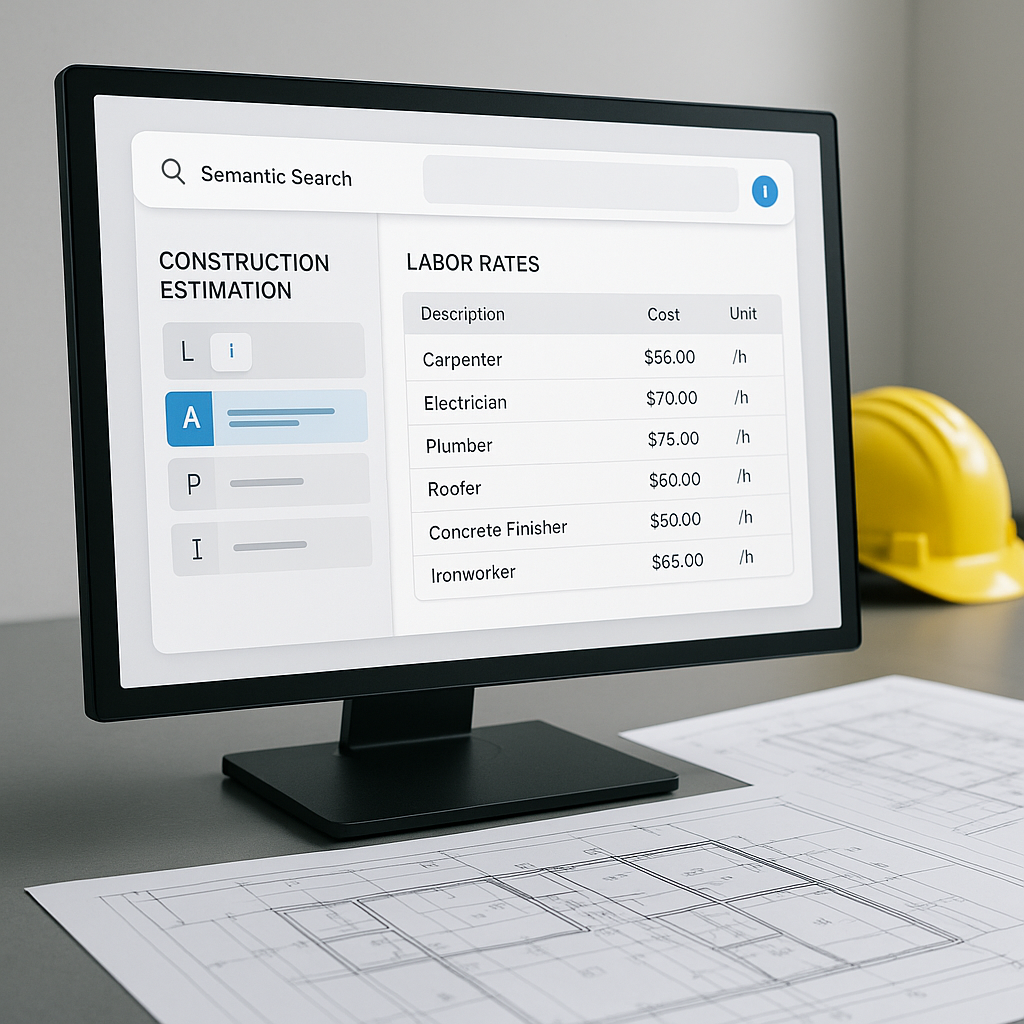
AI-powered rate matching flips this on its head. Tools like EstimateNext use semantic search across 78,000+ SOR items to find rates in seconds. Need the labor cost for installing pre-stressed concrete girders? Type it in, and you’re done. No more flipping pages, no more guessing.
Case Study: When Skanska worked on a $1B rail bridge project, rates for items like rail ties, structural steel, and concrete needed to be pulled from DOT-approved catalogs. AI tools eliminated the manual lookup grind entirely, saving thousands of hours across the project lifecycle. Source
Why Accuracy Is Everything
You might be thinking, "Sure, AI is fast, but can it be trusted?" Good question. The short answer is yes — but there’s a catch. AI tools are only as good as the data you feed them. If your rate catalogs are outdated or incomplete, the results won’t be accurate. That’s why EstimateNext allows users to upload custom materials or finishes to their catalogs, ensuring future estimates reflect real-world costs. Their own case studies note that accuracy improves significantly after the third project as the system learns from feedback loops. Source
Actionable Steps to Improve Accuracy:
- Update Your Catalogs Regularly: Ensure that rate books or digital catalogs reflect current market pricing. This includes labor costs, material prices, and region-specific adjustments.
- Leverage Custom Uploads: If your project involves niche materials or finishes, use tools that allow uploading of custom rates to avoid underestimating costs.
- Validate AI Outputs: Use AI as a starting point but always cross-check key rates, especially for high-impact items.
Comparison Example:
| Manual Rate Matching | AI-Powered Rate Matching |
|---|---|
| 12 hours per estimate | Minutes per estimate |
| High risk of human error | Low error rate with custom setups |
| Requires specialized expertise | Accessible to broader teams |
But human oversight still matters. AI handles the grunt work, but you're the one making judgment calls about margins and scope. Think of it as a trusted assistant, not a replacement.
Who Benefits Most?
Rate matching pain points hit different roles in different ways:
- GC Directors: Speed matters when you’re chasing 5-8 GMP pursuits a year. Saving 12 hours per estimate means you can price more bids without adding staff. That’s critical in a competitive market.
Real-World Example: A GC director at a mid-sized firm wanted to bid on a $20M mixed-use project. With AI, their team reduced the bid prep time by 50% and successfully submitted proposals for two additional projects in the same quarter.
- MEP Subcontractors: Responding to 30-60 bid packages a year is a grind. If you can cut rate lookup from hours to seconds, you’ll hit more deadlines — and win more work.
Action Step: MEP contractors can use AI tools to standardize rate lookup across repetitive items like ductwork, wiring, and piping, allowing junior estimators to handle more bids without compromising quality.
- India Contractors: Forget flipping through CPWD DSR PDFs. AI-powered catalogs with 78,000 searchable items at INR 1,999/month make rate matching affordable and fast.
Case Study: An India-based contractor used AI rate matching while bidding on a government-funded infrastructure project. The tool reduced bid preparation time by 70%, allowing the team to focus on optimizing their margins.
Everyone saves time; everyone gets better accuracy. And for teams stretched thin, that’s not optional — it’s survival.
The Obvious Objection
"But AI can’t think like an estimator." You’re right — it doesn’t. AI doesn’t negotiate with subs or decide on markup percentages. It’s just a tool. But that’s the point. Why waste your expertise on tasks a machine can handle? Free up your brain for high-value work, like shaping strategy or solving scope gaps.
Actionable Tip: Use AI for grunt work but maintain human oversight on critical decisions, especially for complex scopes or tight budgets.
Example Comparison:
| Estimator's Role | AI's Role |
|---|---|
| Define markup, negotiate subs | Rate lookup, data extraction |
| Solve scope gaps | Automate repetitive tasks |
| Strategic bid adjustments | Consistent catalog matching |
FAQ: What You’re Probably Wondering
Q: How long does AI rate matching take to learn?
A: Users report accuracy improvements by the third project. It’s not instant, but the system learns fast and becomes more reliable as you provide feedback. Source
Q: Can AI handle custom rates?
A: Yes. You can upload your own catalogs or define project-specific rates, so estimates reflect your actual costs. This feature is particularly useful for niche projects like luxury residential builds or specialized industrial facilities. Source
Q: Does this work for smaller projects?
A: Absolutely. AI tools scale to any project size, whether it’s a $1M renovation or a $1B rail bridge. Small contractors especially benefit from increased efficiency without needing to hire additional staff. Source
Q: Is AI rate matching affordable for small businesses?
A: Yes. Many tools offer tiered pricing based on usage, making it accessible for small firms. For example, EstimateNext provides plans starting at INR 1,999/month for India-based contractors.
Q: Will AI replace estimators?
A: No. AI is a tool to assist estimators, not replace them. It automates repetitive tasks but relies on human judgment for strategy and decision-making.
The Bottom Line
Rate matching isn’t glamorous, but it’s essential. Done manually, it’s a time sink that drags down productivity. Done with AI, it’s fast, accurate, and scalable. If your team is wasting 12 hours per estimate on rate lookup, tools like EstimateNext can fix it.
Decision Framework:
| When to Use AI Rate Matching | When to Rely on Manual Methods |
|---|---|
| Large, complex projects | Small, simple projects with few rates |
| Tight deadlines | Flexible timelines |
| Teams stretched thin | Teams with specialized expertise |
| Need for repeatable, scalable accuracy | Need for one-off custom estimates |