Why Manual Preconstruction Estimation is Broken
Let’s start with the obvious: manual estimation is a bottleneck. If you’ve ever spent hours flipping through rate books or tracing drawings by hand, you know exactly what I mean. It’s slow, error-prone, and eats into your margins. On large projects, this inefficiency can cost you weeks. On smaller bids, it can cost you the project entirely.
Take the example of quantity takeoffs. To bid on a $1 billion rail project, one of EstimateNext’s customers estimated that it took their team over 56 hours to manually calculate quantities for concrete columns, beams, and rail decks. That’s 56 hours spent on something AI could’ve done in 10 minutes. Source
This isn’t a one-off example. A 2022 McKinsey report revealed that inefficiencies in preconstruction management add up to nearly $1.6 trillion in lost productivity globally every year. Manual estimation is a significant contributor to that. Source
Now, let’s be honest—no one actually loves doing takeoffs. It’s grunt work. And AI isn’t here to steal your job; it’s here to take that grunt work off your plate so you can focus on the parts of your job that actually add value: refining estimates, negotiating with subs, and winning bids.
How AI Takeoff Tools Actually Work
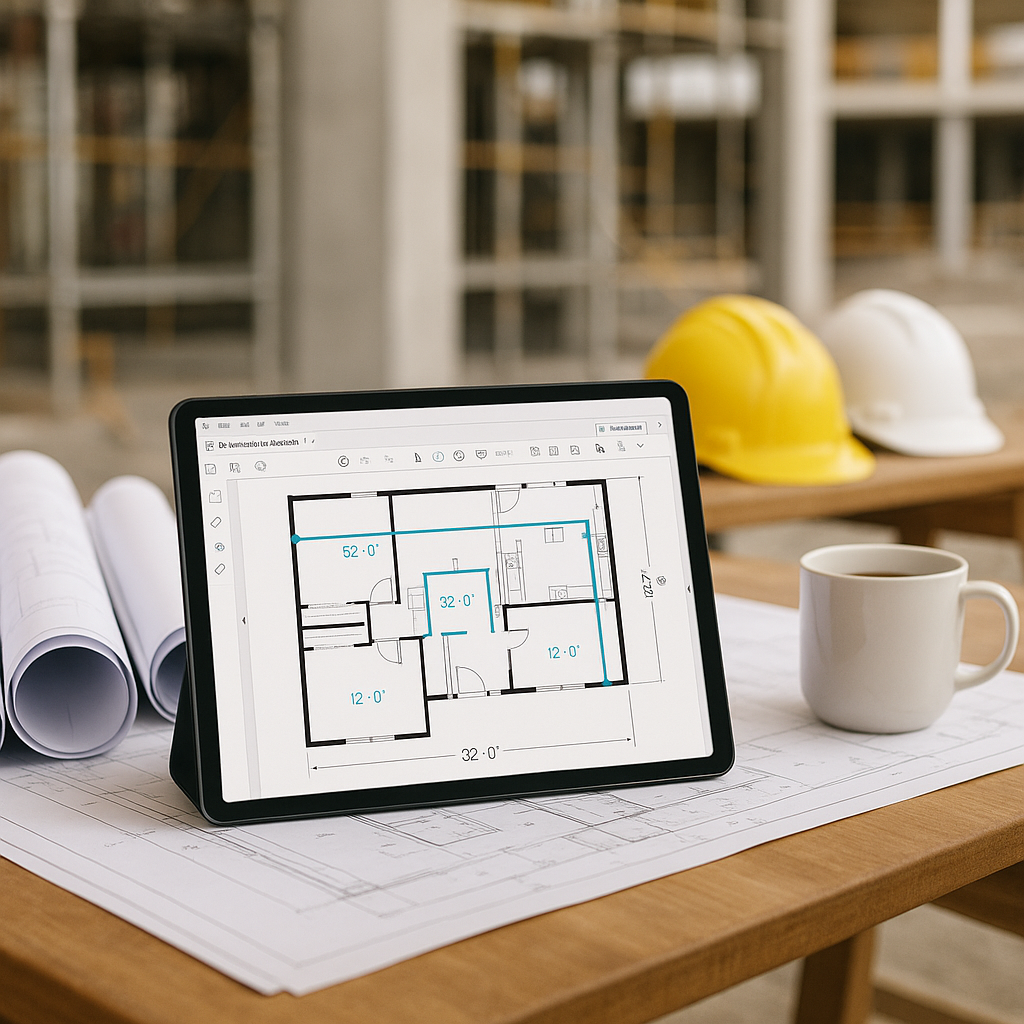
Here’s the part that skeptics usually get wrong: AI doesn’t just guess. It’s not magic—it’s math. Tools like EstimateNext use Vision AI to analyze your PDF drawings, identify quantities, and extract measurements. Room areas, wall lengths, door/window counts—it does it all. And it doesn’t stop there. If something looks off, you can manually remeasure with override tools to maintain accuracy. Source
Let’s break this down with a concrete example:
Imagine you’re bidding on a high-rise project. You upload the architectural drawings into the platform. Within minutes, the system spits out a complete quantity takeoff. What used to take two estimators two full days now takes less than half an hour, including your review. The time savings are massive.
But it’s not just about speed—it’s about accuracy. One contractor shared a case study where AI reduced their takeoff discrepancies by 80% compared to manual methods. That’s fewer costly change orders and disputes down the line. Source
Still don’t trust it? That’s fine—it includes confidence scoring to highlight low-certainty items. You can double-check those manually. Think of it as a junior estimator who works 24/7 and never complains.
Actionable Steps to Get Started with AI Takeoff Tools:
- Start Small: Test AI tools on one project instead of overhauling your entire workflow. Pick a mid-sized bid that’s manageable.
- Upload High-Quality PDFs: AI accuracy depends heavily on input quality. Clean, well-labeled drawings will yield better results.
- Leverage Manual Overrides: Use the built-in tools for adjustments to build trust in the software over time.
- Integrate Your Rate Catalogs: Don’t rely on generic rates. Upload your custom pricing for materials and labor to get tailored outputs.
- Train Your Team: Most AI platforms offer training modules or onboarding sessions. Invest the time upfront for long-term payoff.
What AI Means for Bid Turnaround Time
Time kills deals. If your team spends three days on a bid while your competitor spends just a few hours, you’re already at a disadvantage. This is especially brutal for subcontractors, who often juggle 30–60 bid packages a year.
Using AI, MEP subs can cut their quote cycle from 72 hours to just 4 hours. One EstimateNext case study showed how a mid-sized contractor saved 120 hours on a bid simply by automating their takeoffs. That’s two weeks of labor costs avoided. Source
Here’s a direct comparison:
| Metric | Manual Takeoff | AI Takeoff |
|---|---|---|
| Time per Bid | 72 hours | 4 hours |
| Labor Cost per Bid | $9,360 | $520 |
| Accuracy Rate | ~90% | ~99% |
| Bids per Month | 10 | 15 |
| Potential Wins per Year | 12–18 | 18–25 |
And it’s not just about speed. Faster turnaround means you can bid on more projects. More bids mean more wins. More wins mean more revenue. It’s a simple equation, but it requires a mindset shift: stop treating AI as a luxury and start treating it as a necessity.
Practical Tips for Faster Bidding:
- Batch Bids: Use AI tools to simultaneously process multiple packages.
- Focus on High-Impact Projects: AI lets you prioritize bids with higher revenue potential.
- Monitor Results: Track bid win rates before and after adopting AI to measure ROI.
Common Pushbacks (And Why They’re Wrong)
You might be thinking: “Sure, AI is fast. But can it really be accurate?”
Short answer: yes, with caveats. AI-powered takeoffs are highly accurate—up to 99% in some cases—but they depend on the quality of your input data. Garbage in, garbage out. That’s why tools like EstimateNext include manual override options and learn from your corrections. By your third project, the system is significantly smarter. Source
What about custom rates or unique project specs? No problem. You can upload your own rate catalogs or define project-specific variables. For example, if you’re using a custom material for a facade or have non-standard labor rates, the system lets you add those seamlessly.
And if you’re worried about integration—don’t be. Platforms like EstimateNext are designed to plug right into tools like Bluebeam, Procore, or even your trusty Excel sheets. No need to overhaul your entire workflow. Source
Tips for Overcoming AI Skepticism:
- Pilot AI on Low-Risk Projects: Test the software on smaller jobs to measure accuracy and ROI.
- Customize for Your Needs: Upload your rate catalogs and project variables for tailored outputs.
- Track Productivity Gains: Use KPIs like time savings and bid success rates to quantify benefits.
The Bottom Line: ROI is a No-Brainer
Let’s talk dollars and cents. A typical GC preconstruction director earns around $130/hour. If AI can save 40 hours per estimate, that’s $5,200 saved on labor alone. For a team handling 5–8 GMP pursuits per year, the ROI is undeniable. You’re looking at potential savings of over $40,000 annually—just by adopting a $100/month tool. Source
For subcontractors, the math is even better. If you can respond to 50% more bids, you’re looking at 4–8 additional wins per year. With an average project value of $200K, that’s $800K–$1.6M in incremental revenue. All for less than $1,200/year.
Ready to Save 40 Hours Per Estimate?
If you’re tired of wasting time on manual takeoffs and rate lookups, EstimateNext can help. Save time, bid smarter, and win more projects. Get started free →


